Haiti’s new demolition business


Emmanuel Midi
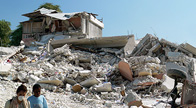
Port-au-Prince - This week when I went out looking for stories, I found myself in an area called Nazon, located between Route de Delmas and Bourdon in Port-au-Prince.
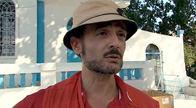
I was taking pictures of a massive excavation scene when a young man named Dejean Medinard came and asked for my identification. After I showed it to him Dejean welcomed me and was happy to answer my questions:
Dejean is in charge of this huge excavation project in Nazon; there’s work going on in the city, just not a great deal of it.
On this project, there is no looting; it’s free for anyone to come by with sledgehammers, break up the concrete, and take any spoils.
The only rule is: you must demolish if you want to take anything from the rubble. The benefit for the owner of the property is having people working for free, to demolish and take away his rubble.
But while these men are crushing the concrete blocks to pull out the iron within them, they are also crushing the human remains trapped in the rubble. According to Dejean Medinard, the workers have retrieved some bones, because some organizations will pay for them. But workers don’t really pay care and attention to the excavation of the bones, the way they do for the iron which is more valuable.
Looking at the bones, hair and dry blood of what used to be a young girl, I felt the weight of responsibility of my country getting heavier on my shoulders.
Before the earthquake, this pile of rubble was a school.
Dejean Medinard told me this was “College Frère Alexandre”, and that he was there when the six-storey building collapsed. He was one of the volunteers who helped take 70 students, both wounded and dead, from the building after the earthquake. This was all they were able to do for a school where there were more than two thousand students plus a family living in the building. Until now they still haven’t received a visit of from the government or any NGO.
Today in Nazon, all there is are workers spread out everywhere with pickaxes, shovels and wheelbarrows, making piles by the driveway even there’s no truck to transport the rubble outside of town.
I can’t help but think: how are we going to get back to school when we know that some of our friends, our family members are still trapped under these rubbles? The worst part is that even though we know where they are, we won’t be able to identify them because they are only bones and dry blood, mixed with the rubble.
We are on March now, and the government is promising to re-open schools in the next few weeks. Students are already preparing a walk to show that they disagree with that decision. They say that they are not mentally prepared to go back to school in these conditions.
I’m going to do my research and get these pictures for the next week’s report.
Port-au-Prince student, fixer and researcher Emmanuel Midi is blogs weekly for Inside Disaster from Haiti. You can learn more about him in these blog posts, connect with him on Facebook or through his business, Haiti Fixers.
Emmanuel volunteers with the youth organization Fonds D’Actions pour le Développement (FAD), profiled by Nicolas Jolliet earlier this month.


2 Comments
2010-03-08
17:10:00
Hello Emmanuel,
I am really glad to be able to read all your reports. I can't find news like this through the regular new outlets. Je suis contente de lire ces histoires de l'espoir. You show not only this hope, but also how much has to be done that is not being done yet. I will post and repost what you write and maybe someone somwhere who can help will be able to. All the best to you.
2010-03-19
15:56:38
Wow! Yes Thank You for sharing this I look for news everywhere. Aside from the radio on the net you are all there is. It's more devastating every day. Merci pour tout ce que tu fais.
Elsa